Skip to content

Getting rid of large furniture requires choosing between donation, resale, municipal disposal, or professional hauling services. The most efficient method depends on the condition of the item, the available time for removal, and local waste management regulations. Items in good condition often find new homes through local charities or online marketplaces, while damaged pieces may require specialized recycling or landfill disposal.
Efficient furniture management involves evaluating the size and weight of the items before attempting to move them. Success in this task prevents physical injury and property damage while ensuring that materials are handled in an environmentally responsible manner. Drawing on years of experience in managing residential and commercial clearouts, Bee Clean Junk Removal provides this guide to clarify the logistical requirements and safety standards necessary for removing heavy objects from complex spaces. These practical steps are designed to help you clear space effectively and responsibly.
Assess the Item Condition and Size
Before moving a single piece of furniture, determine if the item is fit for reuse. Check for structural integrity, deep stains, or odors that might prevent a charity from accepting it. A report from the Environmental Protection Agency (EPA) highlights that furniture and furnishings make up 4.1 percent of all municipal solid waste, totaling over 12 million tons annually. Reducing this number starts with an honest assessment.
Measure the height, width, and depth of the furniture. Compare these figures to the dimensions of doorways, hallways, and stairwells. This step prevents the common mistake of getting a sofa stuck in a corridor. If the piece is larger than the exit, look for removable parts. Many tables have detachable legs, and sofas often have feet that unscrew.
Disassemble for Easier Transport
Taking furniture apart makes the process safer and more manageable. Remove drawers from dressers and glass shelves from cabinets to reduce weight. Use a small bag to collect all screws, bolts, and washers, then tape that bag to a prominent part of the furniture. This ensures the item remains functional for the next owner.
Bonus Tip: Take a photograph of the item before disassembly and another of where the hardware connects. This documentation helps the next person put it back together and increases the value if selling the item.
Explore Donation Options
Donating is an excellent way to keep functional items out of landfills. Many national organizations offer programs to collect large items from residential properties. According to data from the Furniture Bank Network, donating furniture directly assists families who are transitioning out of homelessness or escaping domestic violence.
Local organizations often have specific requirements for what they can accept. Upholstered items must typically be free of rips, pet hair, and cigarette smoke odors. Wooden furniture should be sturdy and not have peeling veneers or significant scratches.
Organizations that Pick Up Furniture
Many charities provide scheduled pickups for a small fee or even for free. Habitat for Humanity ReStore locations often accept furniture and building materials to fund local homebuilding projects. Similarly, organizations like the Salvation Army and Goodwill frequently operate truck routes for large item collection. Always call ahead to confirm that a specific location currently accepts large furniture pieces, as warehouse space can fluctuate.
Sell Items Through Online Marketplaces
If the furniture holds significant value, selling it can offset the cost of replacement items. Digital platforms make it easy to reach local buyers willing to handle the transportation themselves. Research from Statista suggests that while 80 percent of furniture removal waste goes to landfills, the secondary market for home goods is expanding as consumers seek sustainable options.
When listing an item, take clear photos in natural light. Mention the brand, dimensions, and any flaws. Be specific that the buyer must provide their own labor and vehicle for pickup. This prevents situations where a buyer arrives in a vehicle that is too small for the purchase.
Comparative Methods for Furniture Removal
Choosing the right method involves balancing cost, speed, and physical effort. The following table compares the most common ways to handle large furniture.
| Removal Method | Typical Cost | Effort Level | Processing Speed |
|---|---|---|---|
| Donation Pickup | Free to $20 | Moderate | 1 to 2 weeks |
| Online Resale | Profit Potential | High | Variable |
| Municipal Bulk Trash | Free to $50 | High (Curbside) | Scheduled Days |
| Professional Hauling | $75 to $500 | Low | Same or Next Day |
| Scrap Metal Recycling | Small Payout | High | Immediate |
Utilize Municipal Bulk Pickup Services
Most cities offer a service for items that do not fit in standard trash bins. These programs vary significantly by location. Some municipalities provide two free bulk pickups per year, while others require residents to purchase stickers or pay a per-item fee.
Check the local city or county waste management website for “Bulk Item Collection” rules. Most cities require you to place the item on the curb by a specific time, usually no earlier than 24 hours before the scheduled date. Be aware that some jurisdictions fine residents for leaving large items on the sidewalk without a scheduled appointment.
Bonus Tip: Protect the item from rain if it is being picked up for recycling or reuse. Wet upholstery or particle board can become heavy, moldy, and impossible to process, leading collectors to leave it behind.
Hire Professional Hauling Services
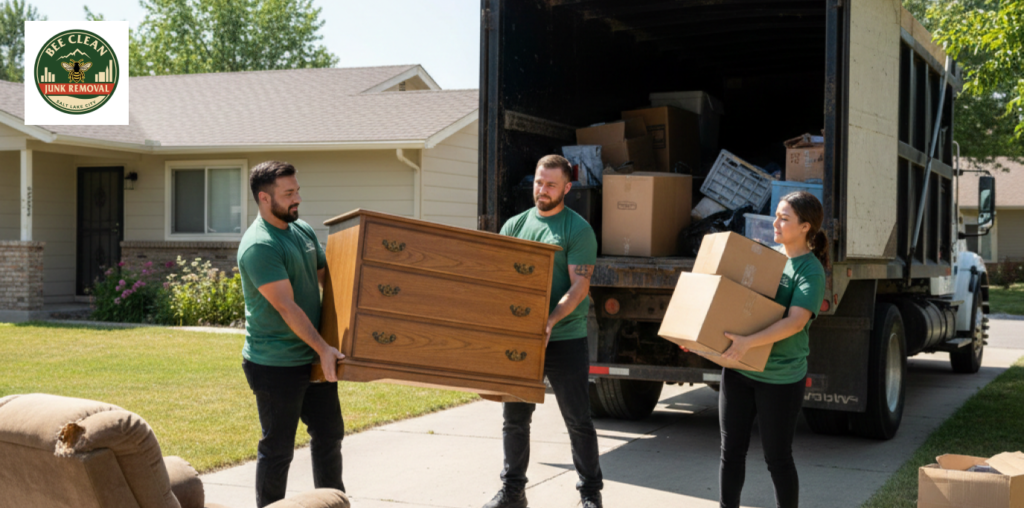
When speed is the priority or the items are too heavy for a single person, professional services are the most effective choice. These companies handle the lifting, loading, and disposal. Bee Clean Junk Removal provides these services with a focus on sorting items for donation or recycling rather than taking everything to a landfill.
Professional teams possess the equipment, such as appliance dollies and furniture straps, to move heavy wardrobes or sectional sofas without damaging floors or walls. This option is particularly useful during estate clearances or when a lease is ending and the property must be empty within a short timeframe.
Things to Consider Before Making a Decision
Before committing to one of the removal methods described above, weigh these factors to avoid common pitfalls:
- Weight and Safety: Never attempt to move solid wood or metal furniture alone. Back injuries are common when individuals underestimate the weight of a sleeper sofa or an armoire.
- Property Access: Evaluate if the item needs to be carried down multiple flights of stairs or if there is an elevator available. Some professional services or charities charge extra for stairs.
- Environmental Impact: Some older furniture may contain lead paint or fire retardant chemicals that require special handling.
- Time Constraints: Selling an item can take weeks. If a move is happening tomorrow, professional hauling or municipal pickup are the only viable paths.
Common Questions About Furniture Disposal
Can I leave furniture by a dumpster?
Leaving furniture next to a dumpster is often considered illegal dumping unless the property owner has specifically authorized it. Most commercial trash services will not pick up items outside the bin and may charge the property owner extra fees, which could be passed back to you as a fine.
How do I get rid of a mattress?
Mattresses are often treated differently than standard furniture because they are difficult to compress in landfills. Many states have specific mattress recycling programs. Check with local recycling centers to see if they accept mattresses or if there is a dedicated drop-off location nearby.
Is particle board furniture recyclable?
Generally, no. Particle board and MDF contain glues and resins that make them unsuitable for standard wood recycling. These items usually must go to a landfill if they cannot be donated or sold.
Furniture Management FAQs
What should I do if my furniture has bed bugs?
Never donate or sell furniture infested with pests. This spreads the problem to other homes and charity warehouses. Mark the item clearly with a sign that says “Bed Bugs” and wrap it in plastic before arranging for professional disposal or a municipal bulk pickup.
Do charities accept large entertainment centers?
Many charities now decline large, heavy entertainment centers designed for older, tube-style televisions. These items have low demand in the secondary market. If a charity refuses the item, consider repurposing it as a garage storage unit or disassembling it for disposal.
How do I dispose of a sofa with a reclining mechanism?
Reclining sofas are exceptionally heavy due to the metal frame inside. If you are disposing of one, you might need to flip it over and unscrew the metal mechanism from the wooden frame to make the pieces light enough to move. The metal can often be sold at a scrap yard.
Can I get a tax deduction for donating furniture?
Yes, if you donate to a qualified 501(c)(3) organization. You must obtain a receipt from the charity. You are responsible for determining the “fair market value” of the items, which is typically the price the item would sell for in a thrift store.
Moving Forward With Your Space
Clearing out large furniture simplifies transitions and restores functionality to a home. By assessing the condition of the items first, you can choose the most responsible path, whether that involves giving the piece a second life through donation or ensuring it is recycled properly. Always prioritize physical safety by using the right tools and seeking help for heavy lifting. Evaluating the cost, effort, and timing of each method allows for a smooth removal process that meets your specific needs.
Professional Assistance for Large Items
When the logistics of furniture removal become overwhelming, professional help ensures the job is done safely. Bee Clean Junk Removal offers reliable solutions for clearing out heavy items quickly and responsibly. Whether dealing with a single couch or an entire household of furniture, the team handles all the heavy lifting and transport. For more information or to schedule a pickup, contact Bee Clean Junk Removal at beecleanjunkremovalslc@gmail.com or call (801) 999-0291 to discuss your specific needs.
Sources
- Environmental Protection Agency (EPA) – Provides official government data on municipal solid waste and furniture disposal rates in the United States.
- Statista – Offers market statistics regarding the percentage of furniture waste that ends up in landfills.
- Furniture Bank Network – National organization providing information on how furniture donations support families in need.
- Habitat for Humanity ReStore – Explains the process and impact of donating furniture and home goods to support community housing projects.